Using business as a force for good, we believe we can end period poverty in our lifetime.

For over 500 million women and girls worldwide, including 1 in 10 in Hong Kong, period poverty hinders health, education and opportunity.

We've built a model to end this — for good.

We’re redesigning how corporations spend to drive scalable social impact.

Typically, businesses create social impact through CSR. But we believe far more impact can be created through the everyday procurement decisions businesses already make. That means corporations choosing to buy from socially-driven supplier; suppliers that use their profits to fund social and environmental challenges at scale.

GoodPeriod puts this model into practice. Through our GoodPeriod Employer Programme, corporations purchase world-class menstrual products and workplace solutions from us.

The profits from these partnerships help subsidise our proven period poverty solutions for NGOs and community organisations working on the ground.

The more corporate partners we work with, the more we can invest in making our solutions affordable, accessible and scalable, creating a consistent source of funding for impact.

Committed to creating long-term solutions to period poverty.

Many period poverty initiatives rely on disposables. That creates two problems: ongoing dependency, because the supply needs constant replenishment, and significant plastic waste in communities that often have limited capacity to manage it.

Our team bring almost two decades working on menstrual health, from corporate workplace programmes to some of the world's most complex humanitarian situations. That experience shapes everything about how we approach this.

We produce safe, high-performing reusable period underwear that lasts up to four years and comes alongside educational resources to improve menstrual health literacy for users.

These products and programmes have been field-tested since 2018 with communities and NGO partners around the world. We are always learning and improving. But our belief is that this is how period poverty ends, within our lifetime.

About Our Period Underwear

How does this change people's lives?

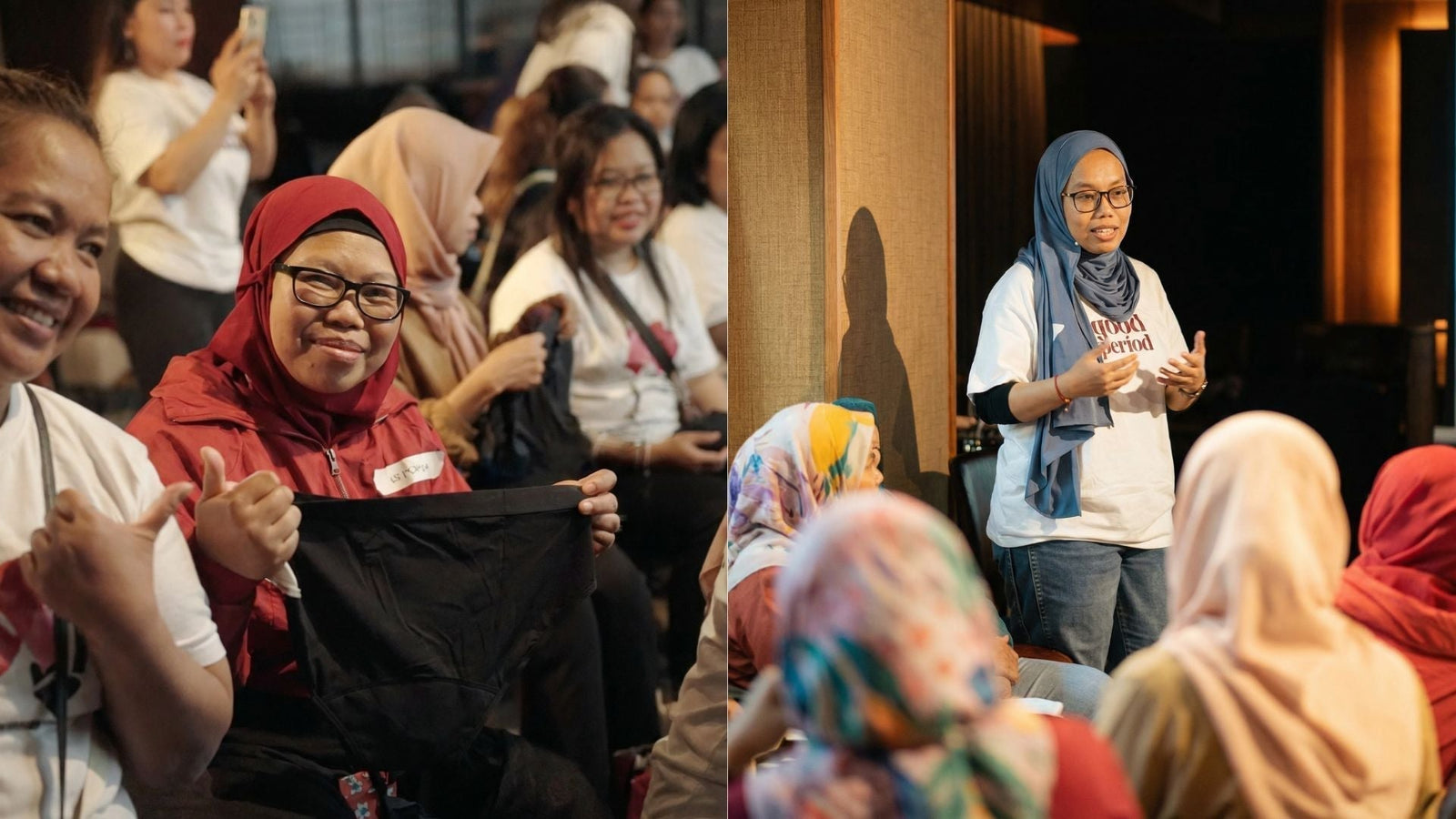
Our solutions are delivered through a strategic collaboration with Reemi, an award-winning NGO that has worked since 2018 with governments and NGOs around the world to tackle period poverty.

Through Reemi’s programmes, adoption rates across humanitarian contexts have consistently reached 94–98%, demonstrating strong acceptance and sustained use of reusable period underwear.

In our Hong Kong programmes, we have seen over 81% continued adoption, with 89% of users reporting reduced financial stress and 96% reporting improved menstrual health knowledge.

These results demonstrate that our impact goes beyond the product itself. By combining high-performing reusable period underwear with education, support and community engagement, we help people build the knowledge, confidence and practical skills to manage their periods with greater dignity and independence.

How does your business model fund these programmes?

Our revenue drives change through two parallel impact streams.

First, through our own flagship programmes, we invest directly in the next generation of changemakers through student-led initiatives in the cities where we operate.

We provide free reusable period underwear alongside training in social entrepreneurship, advocacy and community leadership, enabling students to turn lived experience into action, build local solutions and influence change far beyond the reach of the products themselves.

Second, we supply subsidised reusable period underwear at the lowest possible cost to charities and NGOs working with low-income communities and tackling period poverty.

Every commercial partnership directly strengthens both streams, generating the revenue that allows us to expand free distribution, build local capacity and reduce the cost of products for organisations delivering impact on the ground.

The more our business grows, the further our impact can reach.

What environmental impact does this have?

A single kit replaces approximately 720 disposable pads over a four-year lifespan. For someone spending $4 to $11 per cycle on disposables, switching reduces the cost to around $0.48 per cycle. The environmental displacement is significant; the financial impact for the recipient is immediate.

UNICEF (2024), Generation Plastic: Unpacking the Impact of Plastic on Children, p. 34. UNICEF estimates that more than 12 billion disposable menstrual hygiene products are used annually and states that single-use menstrual products can contain up to 90% plastic, with landfilled products taking up to 500 years to break down.

Reusable period underwear provides a durable alternative, replacing repeated single-use products with a product designed for continued use, reducing waste while helping make period care more affordable and accessible.

How do you measure impact beyond the number of packs distributed?

We track six dimensions: health outcomes, participation and attendance (missed school or work days), financial wellbeing, confidence and stigma reduction, advocacy reach, and environmental displacement. Pack numbers are a starting point, not the endpoint.

Why reusable rather than disposable?

Disposable pads require repeat supply chains into communities that are often the hardest to reach and contribute to significant plastic pollution. A reusable kit, once distributed, provides up to four years of coverage. It is a more cost-effective, and more sustainable solution for the people we are trying to reach.

Are these products safe?

Not all period underwear is made equal. Testing, design, and safety are non-negotiable when these products are being distributed to the people who need them most.

We have a strategic partnership with Reemi, a New Zealand non-profit whose reusable menstrual products have been independently tested and deployed across humanitarian contexts in collaboration with organisations including Oxfam and government bodies.

Our underwear are designed and produced to the Reemi standard, which means products are built with a multi-layered microfibre gusset and an antimicrobial layer that kills bacteria on contact, reducing the risk of infection. They have been tested to ensure that they are PFAS-free and without any heavy metals.

They are procured by international humanitarian organisations who buy according to strict standards.

“Learning about reusable products changed how I see my body and periods. It’s given me comfort, confidence, and the knowledge to choose what works best for me. It’s also eco-friendly, safe, and helps me save money.”

Mary Ann Annie— Migrant domestic worker, GoodPeriod pilot participant, Hong Kong, 2024

OUR 2030 MOONSHOT

100,000 Women & Girls

Over the next five years, our ambition is to reach 100,000 women and girls with safe, high-performing reusable period underwear, alongside the knowledge, confidence and support to manage their periods with dignity. But our goal is bigger than distributing 100,000 products. We want to build a model that creates lasting change — combining access to reusable period care with education, student-led advocacy, social entrepreneurship and community leadership.

Hong Kong Projects

Young Changemaker Programme

We fund student-led projects that tackle period poverty and menstrual stigma on university campuses and communities across Hong Kong. Every commercial partnership contributes, giving students the resources and platform to turn research into real change for the communities around them.

Read more

Migrant Domestic Worker Programme

Working with leaders from the migrant domestic worker community directly, we provide reusable period care, health education, and subsidised ongoing product access for migrant domestic workers in Hong Kong — 66% of whom are reported to experience period poverty in Hong Kong.

Read more